
The Atlantic hurricane season officially opens on June 1, and Charleston has been on the receiving end of enough named storms to know that preparing your home for hurricane conditions is a year-round discipline, not a last-week scramble. The exterior of your home — roof, siding, windows, gutters, paint, landscaping — is what the storm hits first. Smart pre-season exterior work reduces damage, speeds insurance claims, and shortens recovery. Here’s the checklist Reflections of Charleston uses with clients across the Lowcountry, broken down by timing.
Why hurricane prep starts before the season — not after the cone appears
By the time a named storm enters the seven-day forecast cone, the contractors who handle exterior preparation are already booked. The right time to clean gutters, inspect siding, secure outdoor surfaces, and refresh exterior paint is the four-to-six-week window before peak season — generally mid-May through early July. Homes that are well-maintained going into hurricane season suffer less damage and recover faster than homes that were already overdue for upkeep when the storm hit. This is one of the most under-discussed parts of Charleston home ownership.
The 30-day pre-season exterior checklist
Run through this checklist any time in the four weeks leading up to June 1, or as soon as practical if you missed it.
Roof and gutters
- Inspect the roof for loose, lifted, or missing shingles. Heavy wind tears at any compromised shingle first. Replace anything questionable.
- Check flashing around chimneys, vents, and skylights. Cracked or lifted flashing is the #1 cause of post-storm leaks.
- Clean gutters and downspouts thoroughly. A clogged gutter sends storm water back under the eaves and into wall cavities. This is the single highest-ROI hurricane prep task.
- Make sure downspouts direct water at least 5 feet from the foundation. Extension downspouts or splash blocks are cheap insurance.
- Soft-wash the roof if it hasn’t been cleaned in 4+ years. Heavy algae colonies trap moisture that storm rain doesn’t help.
Siding, trim, and exterior paint
- Look for any peeling, cracked, or failing paint — especially around windows, doors, and at the bottom of siding panels. Storm wind drives water into compromised paint and accelerates damage.
- Caulk any visible gaps around window trim, door frames, and where siding meets dissimilar materials.
- Confirm soffit and fascia integrity. Soft or rotting soffits will tear off in high winds.
- If a full exterior wash is overdue, schedule it now. A clean home reveals damage that a stained home hides — and a coat of mildew makes paint failure harder to spot.
Windows, doors, and outdoor fixtures
- Inspect window seals and weatherstripping. Replace anything brittle, peeling, or compressed.
- Confirm storm shutters function if your home has them, or know your plywood-installation plan if you’ll need to board up.
- Tighten exterior light fixtures, house numbers, and decorative hardware — anything that could become a projectile.
- Document the condition of each exterior elevation with phone photos. Pre-storm photos make post-storm insurance claims dramatically faster.
Landscape and outdoor surfaces
- Trim dead branches and weak limbs overhanging the roof, driveway, or vehicles. Trees are the most common cause of structural storm damage in Charleston.
- Identify what gets moved indoors when a storm is named — furniture, grills, planters, decor, umbrellas.
- Confirm where your kayak, paddleboard, garden hoses, and miscellaneous outdoor gear go when you need the deck clear.
- Pressure wash the driveway, walkways, and pool deck if it’s been a while — clean hardscape reveals cracks that need attention before storm season.
The 72-hour pre-storm checklist (when a named storm is in the cone)
Once a named storm enters the 5-day cone with Charleston in the projection, the focus shifts from maintenance to securing:
- Bring all outdoor furniture, grills, planters, and decor indoors or to a sheltered ground-floor space
- Move vehicles away from large trees if possible
- Secure storm shutters or install plywood on windows if your home requires it
- Clear gutters one more time (debris from pre-storm wind shifts builds up fast)
- Photograph every exterior elevation, the roof from the ground, and any pre-existing damage — date-stamped phone photos are sufficient
- Check sump pump and exterior drains for any pre-storm flooding signs
- Charge phones, tablets, and battery banks
- Fill bathtubs and large containers with water for sanitation if utilities go out
During the storm — what not to do
The exterior of your home will take the storm without your help. The actions that cause injuries during Charleston hurricanes are almost always people trying to fix or document something outside during the storm. Stay indoors, away from windows, and let the home do its job. Damage assessment happens after.
The post-storm exterior recovery checklist
Salt spray washdown
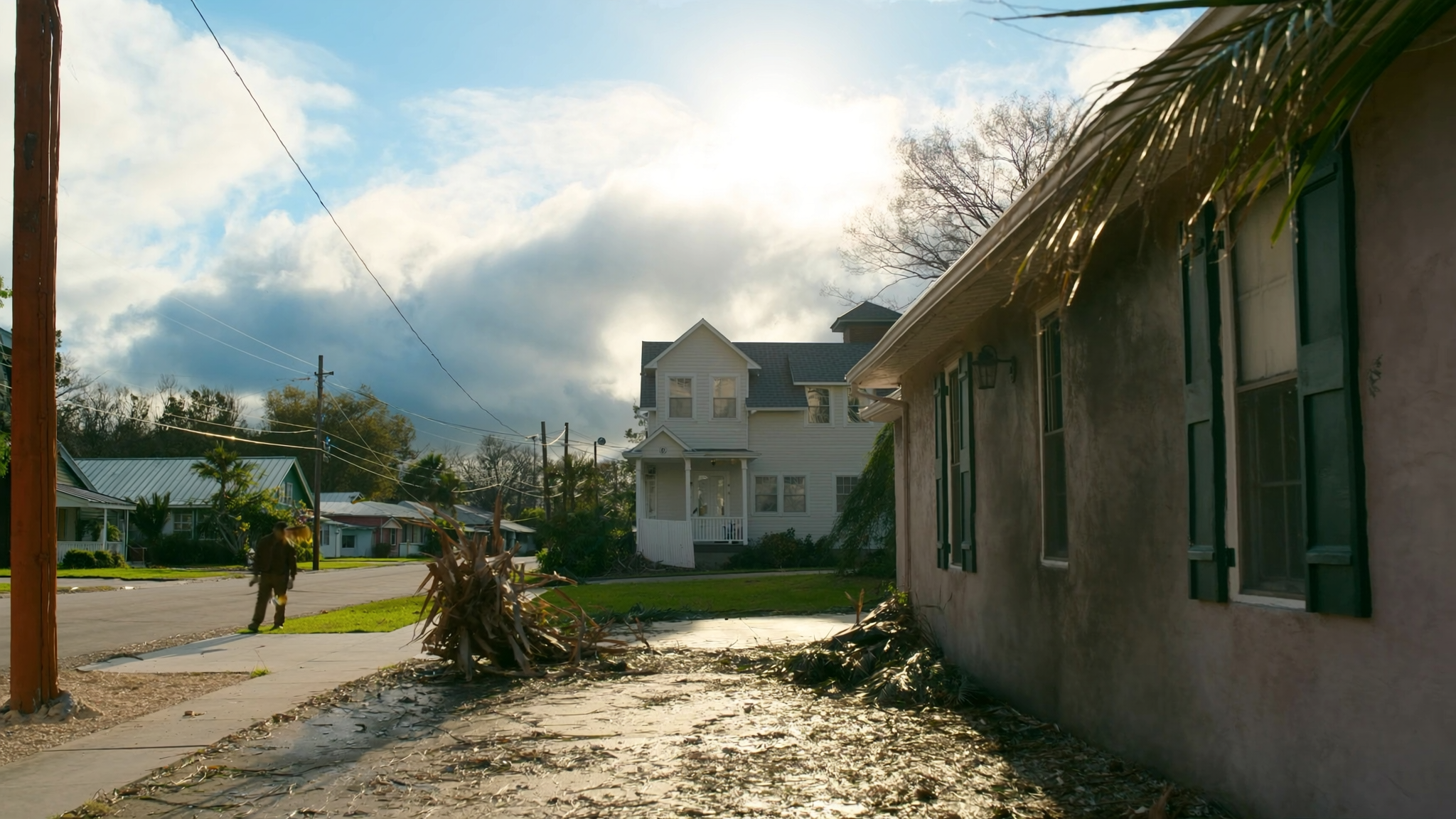
This is the most under-appreciated post-storm task in Charleston. Hurricane-force winds carry massive amounts of salt spray inland — far beyond the visible storm surge zone. Salt spray on siding, windows, roofing, and outdoor fixtures accelerates corrosion of metal hardware, dries out paint, and feeds biological growth in the weeks after the storm. A thorough freshwater rinse within 7–10 days of the storm cuts long-term salt damage substantially.
This is one of the calls we get most often after named storms — homeowners whose homes “weren’t even hit hard” finding chalky residue on every south- or east-facing surface. The fix is a full house wash and a fresh-water rinse of all outdoor metal hardware. For more on how salt-laden Lowcountry air affects exteriors, see our guide on coastal grime on Isle of Palms properties.
Debris and tree damage
- Document any tree damage with photos before clearing debris
- Don’t attempt to remove large limbs or compromised trees yourself — call a tree service
- Watch for damaged power lines under or near downed debris; treat all downed lines as live
- Note any debris-caused damage to siding, gutters, or the roof for insurance documentation
Roof and siding inspection
- Walk around the home and look up at the roof from each side for missing shingles, lifted edges, or visible damage
- Check inside the attic for daylight, moisture, or water staining on rafters
- Check ceilings in each room for water spots that have appeared since the storm
- Inspect siding for impact damage, cracked panels, or compromised paint
- If you suspect damage, call a roofing contractor before the next rain
Documentation for insurance
- Compare pre-storm photos to post-storm condition for every elevation
- Document the date, time, and weather conditions of your inspection
- Don’t sign anything from a door-to-door storm-chaser contractor; verify South Carolina contractor licensing through the state’s online registry
- Schedule a professional exterior cleaning + inspection from a vetted local crew within two weeks
Why salt-spray washdown matters more than people realize
Lowcountry homes that experience a near-miss hurricane often look fine for the first month — then start showing accelerated paint failure, mildew bloom, and metal corrosion within 90 days. The cause is salt residue that didn’t get rinsed off. A post-storm soft wash and freshwater rinse, applied within two weeks of the storm, prevents most of that delayed damage. Our professional pressure washing services include post-storm cleanings as part of the routine cadence on coastal-adjacent properties.
Frequently asked questions
When does the Atlantic hurricane season start in Charleston?
The Atlantic hurricane season officially runs from June 1 to November 30, with peak activity typically from mid-August through October. Charleston is in the historical hurricane track and should be considered at meaningful risk during this entire window.
What’s the most important pre-hurricane task for the exterior of a Charleston home?
Cleaning gutters and downspouts is the single highest-impact task. A clogged gutter during a hurricane sends storm water back under the eaves and into the wall cavity, where it causes hidden long-term damage that often isn’t visible until months later.
Should I pressure wash my house before or after a hurricane?
Both — but for different reasons. Pre-season cleaning lets you spot paint failures and damage that needs repair before storms hit. Post-storm cleaning rinses salt spray, debris, and biological growth that the storm deposited. The pre-season and post-storm washes serve different purposes.
How long after a hurricane should I schedule exterior cleaning?
Within 7–10 days for coastal-adjacent homes, especially if salt spray was significant. The delay isn’t optional — salt residue does measurable cumulative damage in the weeks following a storm.
Does my homeowners insurance cover post-storm exterior cleaning?
Standard homeowners policies typically don’t cover routine cleaning, but they do cover storm-related damage repair. If a tree limb damaged siding, paint, or the roof, that’s a claim. Routine post-storm salt-spray cleaning is a homeowner expense. Consult your specific policy and adjuster.
Protect your Charleston home this hurricane season
The four weeks before June 1 are the most valuable hurricane-prep window of the year. A clean, well-maintained exterior holds up better in the storm and recovers faster after. Our team handles pre-season exterior preparation across the Charleston metro — house washing, roof inspection cleaning, gutter clearing, paint touch-ups, and post-storm salt-spray washdowns. Most clients on our annual maintenance schedule are already on the calendar for May or early June, but we keep capacity reserved for new clients each year.
For coordinated pre-season service that includes full home services beyond exterior cleaning, schedule a walk-through and we’ll prioritize the items that most reduce storm risk for your specific property.
Schedule Your Pre-Hurricane Service →
Reflections of Charleston provides white-glove exterior cleaning, painting, and seasonal property maintenance across the Charleston metro. For the official hurricane forecast and preparedness guidance see the National Weather Service Charleston and National Hurricane Center.
For the wider autumn list, see our fall home maintenance checklist for Charleston homes.