
Your Isle of Palms Driveway Won’t Protect Itself — Here’s What You Need to Know
Driveway sealing Isle of Palms homeowners rely on is one of the smartest ways to protect your asphalt from the unique punishment a barrier island delivers year-round.
Quick answer: Here’s what you need to know upfront:
- What it is: A liquid sealcoat is applied over asphalt to block water, salt, UV rays, and traffic wear
- Why it matters here: Isle of Palms’ salt air, humidity, and intense sun break down unsealed asphalt much faster than inland driveways
- How often: Every 2–3 years in mild climates; every 2 years given coastal exposure
- Best time: Late fall or spring — warm, dry days above 50°F with low humidity
- Cost range: Typically $0.15–$0.25 per square foot for sealcoating (separate from full asphalt installation)
- Result: A properly sealed driveway can last 25–30 years and sealcoating alone can extend pavement life by up to 300%
Living on a barrier island is a privilege. But it comes with a trade-off — everything weathers faster here. Your driveway is no exception.
Salt air creeps into every unsealed pore of your asphalt. Humidity accelerates the breakdown. The Lowcountry sun bakes the surface until it grays, cracks, and crumbles. Add storm surge, tourist traffic, and the occasional flood, and your driveway is working hard every single day.
The good news? This kind of damage is almost entirely preventable with regular sealcoating.
This guide walks you through everything — from why coastal driveways degrade faster, to what the sealing process looks like, to how to choose the right professional for the job.
Why Driveway Sealing in Isle of Palms is a Coastal Necessity
Isle of Palms is a beautiful barrier island, separated from the mainland by the Intracoastal Waterway and connected by the SC-517 connector. While we love the ocean breeze, that same breeze carries salt—the natural enemy of almost every building material, including asphalt.
Asphalt is essentially a mixture of stone (aggregate) and a sticky, petroleum-based binder called bitumen. When you first move into a home with a fresh asphalt driveway, it is dark, flexible, and waterproof. However, the coastal environment starts attacking that binder immediately.
The Impact of Salt Air and Humidity
In a coastal environment like ours, salt air combined with high humidity creates a “corrosion cocktail.” Salt is hygroscopic, meaning it attracts water. When salt spray settles on your driveway, it pulls moisture into the tiny pores of the asphalt.
Unsealed asphalt edges are particularly vulnerable. In older waterfront neighborhoods or near the beach, stormwater and salt air can weaken the sub-base of the pavement. If the sub-base—the foundation under the asphalt—gets soft, the heavy weight of cars will cause the asphalt to sag and eventually crack. This is why residential services that focus on the exterior health of your home are so vital in the Lowcountry.
Combatting Intense Lowcountry Sun
If the salt doesn’t get it, the sun will. Isle of Palms experiences intense UV radiation, especially during our long, scorching summers. UV rays cause a process called oxidation.
Oxidation is what turns a beautiful, jet-black driveway into a faded, brittle gray one. As the sun bakes the asphalt, it breaks down the chemical bonds in the bitumen binder. The binder loses its “glue-like” properties and becomes brittle. Once the asphalt is brittle, it can no longer expand and contract with the heat. Instead, it develops “spiderweb” cracks. Without driveway sealing Isle of Palms residents will find their pavement graying and cracking much sooner than those living further inland.

| Feature | Unsealed Asphalt (Coastal) | Sealed Asphalt (Coastal) |
|---|---|---|
| Lifespan | 10–15 Years | 25–30 Years |
| Appearance | Gray, faded, rough | Deep black, smooth, “like new” |
| Water Resistance | Porous; absorbs moisture | Waterproof barrier |
| UV Protection | None; oxidizes quickly | High; reflects UV rays |
| Maintenance Cost | High (repairs/replacement) | Low (preventative sealing) |
The Science of Protection: How Sealcoating Works
Think of sealcoating as a high-performance “sunscreen and raincoat” for your driveway. It is a liquid emulsion—usually a mixture of coal tar or asphalt cement, specialized resins, and water—that is spread over the surface to create a sacrificial layer.
When we apply this liquid barrier, it fills the tiny voids on the surface of the asphalt. This prevents water, oil, and salt from penetrating the pavement. It also provides a dark, rich finish that absorbs heat and helps the driveway stay flexible.
Extending Pavement Life by 300%
The statistics are clear: properly applied sealcoat can extend the service life of your pavement by 300%. Considering that a new asphalt driveway can cost between $7 and $15 per square foot to install, protecting that investment is a financial no-brainer.
By keeping the binder flexible and the water out, you prevent the structural integrity of the driveway from failing. Just as interior and exterior painting protects the “skin” of your home, sealcoating protects the “skin” of your property’s entrance. It’s far cheaper to apply a thin coat of protection every few years than it is to tear out and replace thousands of pounds of asphalt.
Enhancing Safety and Curb Appeal
Beyond the structural benefits, there is the undeniable “wow” factor. A freshly sealed driveway provides a high-contrast backdrop for your landscaping and home exterior. It makes the colors of your house pop and gives the entire property a well-maintained, “concierge-level” look.
From a safety perspective, sealcoating can actually improve skid resistance if the right aggregates (like sand) are mixed into the emulsion. It also provides a smoother surface that is much easier to sweep or wash. For commercial properties or HOAs in Isle of Palms, this also allows for high-visibility line striping, which is essential for safety near busy beach traffic areas.
When and How to Schedule Your Driveway Sealing Isle of Palms Project
Timing is everything in the Lowcountry. You can’t just slap on a sealcoat whenever you feel like it; the weather has to cooperate.
Signs Your Pavement Needs Driveway Sealing Isle of Palms
How do you know it’s time? Keep an eye out for these red flags:
- Graying Color: If your driveway looks like an old chalkboard, the binder is oxidizing.
- Spiderweb Cracks: Small, interconnected cracks mean the asphalt is becoming brittle.
- Loose Gravel: If you see small stones (aggregates) accumulating in the gutters or at the end of the driveway, the “glue” is failing.
- Oil Stains: Asphalt is petroleum-based, so oil and gas leaks from cars will actually dissolve the pavement if it isn’t sealed.
- Water Pooling: While sealing won’t fix a major drainage issue, it prevents standing water from seeping into the sub-base.
Preparing for Professional Driveway Sealing Isle of Palms
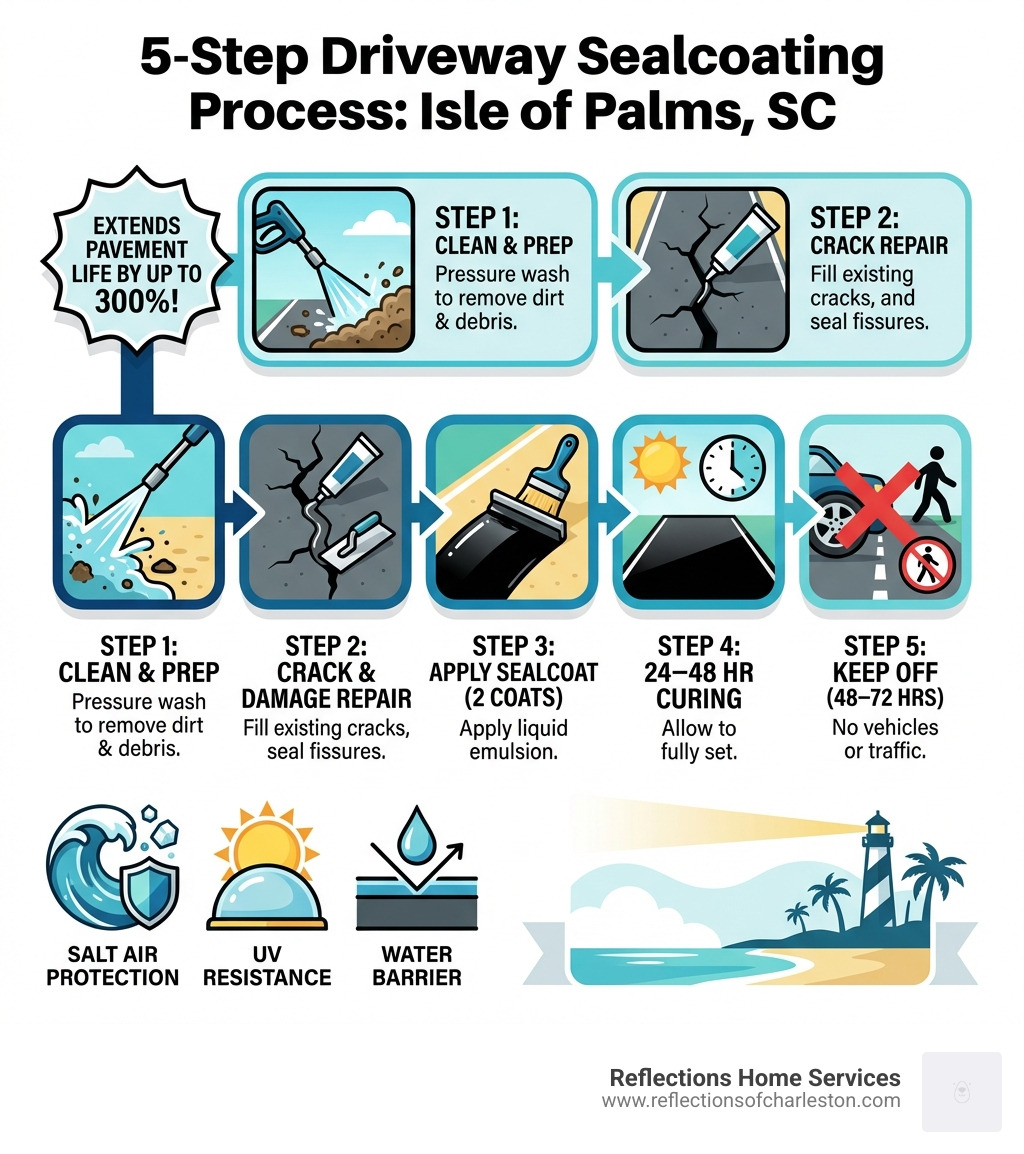
Preparation is 90% of the job. You can’t put a high-quality sealcoat over a dirty driveway. We always recommend a thorough cleaning first. This is where pressure washing services become essential.
The process usually follows these steps:
- Deep Cleaning: Removing all dirt, mold, mildew, and debris. We use specialized products to ensure the surface is pristine.
- Vegetation Removal: Trimming back grass edges and removing weeds that have sprouted in cracks.
- Crack Filling: Before the sealcoat goes on, larger cracks must be filled with a hot or cold-pour crack filler to prevent water from reaching the foundation.
- Oil Spot Treatment: Priming any oil or gas stains so the sealcoat will actually bond to the surface.
Considering the Isle of Palms Climate
In Isle of Palms, the best time for driveway sealing Isle of Palms projects is usually late fall or spring. Why?
- Humidity: High humidity can double or triple the curing time. We need the water in the emulsion to evaporate so the sealer can harden.
- Tourism Season: You don’t want your driveway blocked off during peak vacation months when you have guests arriving.
- Temperature: The air and pavement temperature must be at least 50°F and rising for the sealer to bond correctly.
Frequently Asked Questions about Lowcountry Driveway Care
How much does driveway sealcoating cost in Isle of Palms?
The cost of driveway sealing Isle of Palms varies based on a few factors:
- Square Footage: Larger driveways often get a slightly lower price per square foot.
- Condition: If your driveway has hundreds of cracks that need filling, the labor costs will be higher.
- Material Quality: Not all sealers are created equal. High-solids, commercial-grade emulsions cost more but last significantly longer.
- Accessibility: Tight corners or difficult-to-reach areas might require more hand-brushing versus spray application.
On average, you can expect to pay between $0.15 and $0.25 per square foot for the sealcoating itself, though prep work like pressure washing and crack filling is usually priced separately.
How often should I seal my asphalt in a coastal environment?
While the general rule is every 3 years, the Isle of Palms environment is “extreme.” Between the salt air and the intense UV rays, most local experts recommend a two-year cycle.
If you notice the driveway turning gray after just 18 months, it’s a sign that the coastal sun is particularly harsh on your specific lot. Regular maintenance prevents those small cracks from turning into expensive potholes.
Can I DIY my sealcoating or should I hire a pro?
You can buy buckets of sealer at a big-box store, but we generally recommend professional service for a few reasons:
- Equipment: Professionals use high-pressure spray systems or professional squeegees that ensure an even, consistent coat. DIY applications often end up with “swirl marks” or uneven thickness.
- Material Grade: The stuff you buy at the store is often watered down. Professionals have access to commercial-grade emulsions that bond better and last longer.
- Preparation: As mentioned, the cleaning is the most important part. If you don’t get the mold and salt off first, the sealer will peel off within months. Many homeowners find it easier to bundle their driveway care with other needs like window cleaning services to get the whole house looking pristine at once.
- Liability: Dealing with petroleum-based products can be messy and environmentally sensitive. Pros know how to handle the materials safely without getting black sealer on your white siding or your neighbor’s car.
Conclusion
Your driveway is the “welcome mat” of your home. In a high-end coastal community like Isle of Palms, maintaining that entrance is about more than just aesthetics—it’s about protecting a significant property investment.
By understanding the science of driveway sealing Isle of Palms residents can avoid the $10,000+ headache of a full driveway replacement. From fighting off salt air corrosion to blocking out the punishing Lowcountry sun, sealcoating is the single most effective maintenance task you can perform for your asphalt.
At Reflections Home Services, we believe in a concierge-style approach to property care. Whether it’s ensuring your driveway is perfectly prepped through expert pressure washing or keeping your home’s “skin” protected with a fresh coat of paint, we are here to help you navigate the challenges of Lowcountry living.
Don’t wait for the first pothole to appear. Schedule your professional exterior maintenance today and give your Isle of Palms home the protection it deserves.