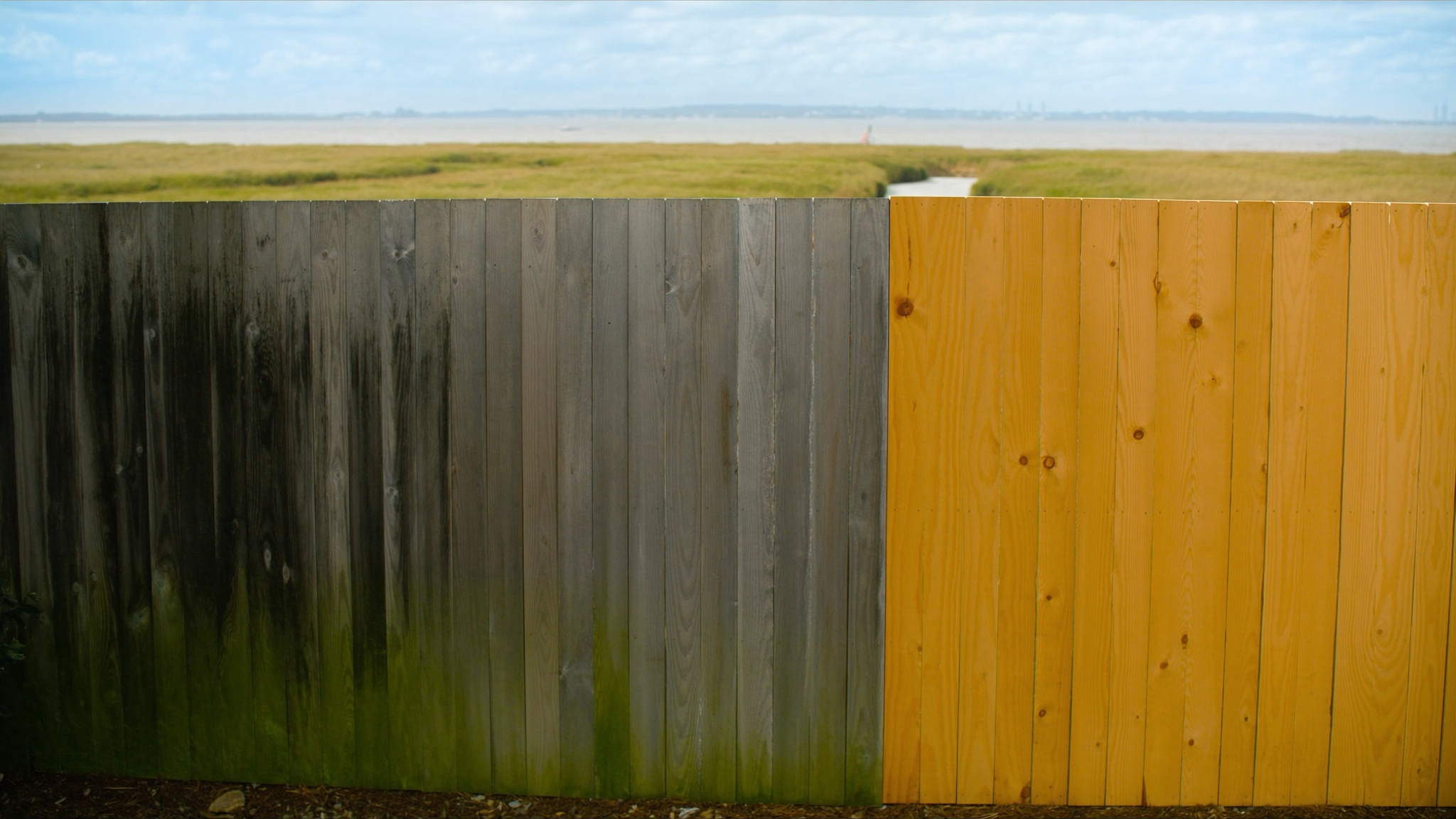

A wood fence in the Lowcountry ages faster than almost anything else on the property. It has no roof over it, it takes direct sun on one side and permanent shade on the other, and it sits in the same humidity that greens every north-facing wall in Charleston. Most homeowners assume a gray, blotchy fence has simply reached the end of its life. In the majority of cases it has not, and restoration costs a fraction of replacement.
This guide covers what is actually happening to your fence, why pressure alone is the wrong tool, and what a proper cleaning and restoration involves.
What Is Happening to Lowcountry Fences
Three separate processes run at once, and they look similar from a distance.
Ultraviolet graying. Sunlight breaks down lignin, the compound that binds wood fibers and carries much of its color. The surface layer turns silver-gray. This is cosmetic and shallow, and the original color sits directly beneath it.
Organic growth. Mildew, algae, and moss establish on the shaded side and along the bottom rails where moisture lingers. This is the green and black mottling, and unlike graying it is actively holding water against the wood.
Tannin bleeding. Cedar and pressure-treated pine both leach tannins when repeatedly wetted, leaving rust-colored streaks that homeowners often mistake for hardware stains.
Only the second one is causing structural harm. Growth keeps the fiber damp, and continuously damp wood softens, cups, and eventually rots at the rail joints and the base of the pickets. That is why a fence that is merely gray can wait, while a fence that is green needs attention.
Why Pressure Alone Ruins Fences
This is the most common self-inflicted damage we see. A homeowner rents a pressure washer, and the fence looks bright the same afternoon. Within a season it looks worse than before.
High pressure does not remove growth from wood so much as remove the wood. It tears out the soft spring growth between the harder grain lines, leaving a furrowed, fuzzy surface. That raised grain then holds far more water and dirt than the original smooth face, so regrowth is faster and heavier. It also leaves wand marks, and on a long fence run those stripes are permanent and impossible to miss.
Worse, it leaves the fibers open. If the fence is sealed or stained afterward, the finish soaks unevenly into the damaged and undamaged areas and dries blotchy. The same principle applies to decks, which we covered in our guide to cleaning and restoring a deck in the Lowcountry.
The Right Process
Proper fence restoration is chemistry first, low pressure second, and it works with the wood rather than against it.
- Assessment. We check for rot at the posts and bottom rails, loose hardware, and whether there is an existing finish. A post that is failing at ground level needs a carpenter, and we will say so rather than wash around it.
- Landscape protection. Fences run through planted beds and lawn along their whole length. Everything adjacent is saturated with clean water and covered where needed before anything else begins.
- Cleaning solution. A wood-appropriate cleaner is applied and allowed to dwell, killing the growth and lifting the gray oxidized layer without force.
- Low-pressure rinse. Enough to carry the loosened material away, far below the threshold that damages grain.
- Brightening. A neutralizing brightener restores the wood’s natural tone, balances the pH after cleaning, and removes tannin streaking. Skipping this step is why some cleaned fences look washed out rather than restored.
- Drying time. Wood must reach the correct moisture level before any sealer or stain goes on. In Charleston humidity that is usually two to three dry days, sometimes longer.
Should You Seal or Stain Afterward?
In this climate, generally yes. Bare wood in the Lowcountry is absorbing moisture constantly, and a sealer or semi-transparent stain slows that considerably while adding ultraviolet protection. Expect two to three years from a quality application on a fence, which is shorter than most manufacturers claim because our sun and humidity are harder on finishes than the test conditions.
The important part is that cleaning must come first and be done correctly. Sealing over mildew traps it beneath the film, where it continues to grow and eventually pushes the finish off. The prep determines the outcome, which is the same principle behind good exterior painting in the coastal climate.
Vinyl and Aluminum Fencing
Wood is not the only fence that suffers here. Vinyl fencing develops the same green film on its shaded faces and a chalky oxidation from ultraviolet exposure. Aluminum and wrought iron collect organic growth in the same way, and coastal properties see corrosion begin at any point where the coating has been chipped.
Both are cleaned by soft washing rather than pressure, using the same low-pressure approach we apply to siding. Our guide to soft washing versus pressure washing explains where each method belongs.
Timing and Frequency
Early fall is an excellent window in Charleston. The worst of the summer heat has passed, humidity is beginning to ease, and there is usually a run of dry days long enough to clean, dry, and seal properly before winter.
Most Lowcountry fences want cleaning every one to two years, with sealing every two to three. Fences in heavy shade, backing onto marsh, or under mature tree canopy need the shorter interval. A fence kept on that cycle can easily outlast one that is left alone by a decade, and that is the whole argument for maintaining it.
Restore Rather Than Replace
Before you price a new fence, have the existing one looked at. Homeowners are regularly surprised by how much wood is left under the gray, and replacement is one of the more expensive projects on a Charleston property.
Request a free estimate and we will tell you honestly whether your fence is worth restoring, across Charleston, Mount Pleasant, Daniel Island, James Island, Johns Island, and the barrier islands.