Painting exterior trim is the part of a repaint that decides whether the whole job lasts. Trim means fascia, soffits, window and door casings, corner boards, sills, shutters and porch rails, and it sits at exactly the joints where water finds its way in. In Charleston it also faces salt air, sustained humidity and a long UV season, which is why trim almost always fails years before the siding does, a pattern we cover in how often to paint a house exterior. This guide covers why trim fails, how it should be prepared, and when to repair instead of paint.
Why Exterior Trim Fails First in the Lowcountry
Trim has more edges, joints and horizontal surfaces than any other part of the exterior. Sills and the tops of rails collect standing water, end grain wicks moisture like a straw, and every joint is a place where caulk can crack as boards expand and contract. Add airborne salt, which holds moisture against the paint film, and a mildew season that runs most of the year, and a coating that would last a decade on a flat wall gives out much sooner on a window casing.
Orientation matters too. South and west faces take the hardest UV and heat, while north faces and anything under live oaks stay damp and grow mildew. If your trim is failing unevenly, that is usually the explanation.
Wood, Composite and PVC Trim Need Different Treatment
The material under the paint changes how it should be prepared and what finish it can carry.
| Trim material | How it behaves | Charleston watch-out |
|---|---|---|
| Wood | Needs primer on bare areas; moves with moisture | End grain and sills rot first; check for soft spots before painting |
| Fiber cement or composite | Dimensionally stable; takes paint well | Needs a compatible primer; cut edges must be sealed |
| PVC or cellular PVC | Rarely rots; paintable with 100% acrylic | Dark colors can build heat; check the manufacturer’s light reflectance limit |
Prep Is the Real Work of Painting Exterior Trim
A good finish coat cannot rescue poor prep. On trim, the sequence matters:
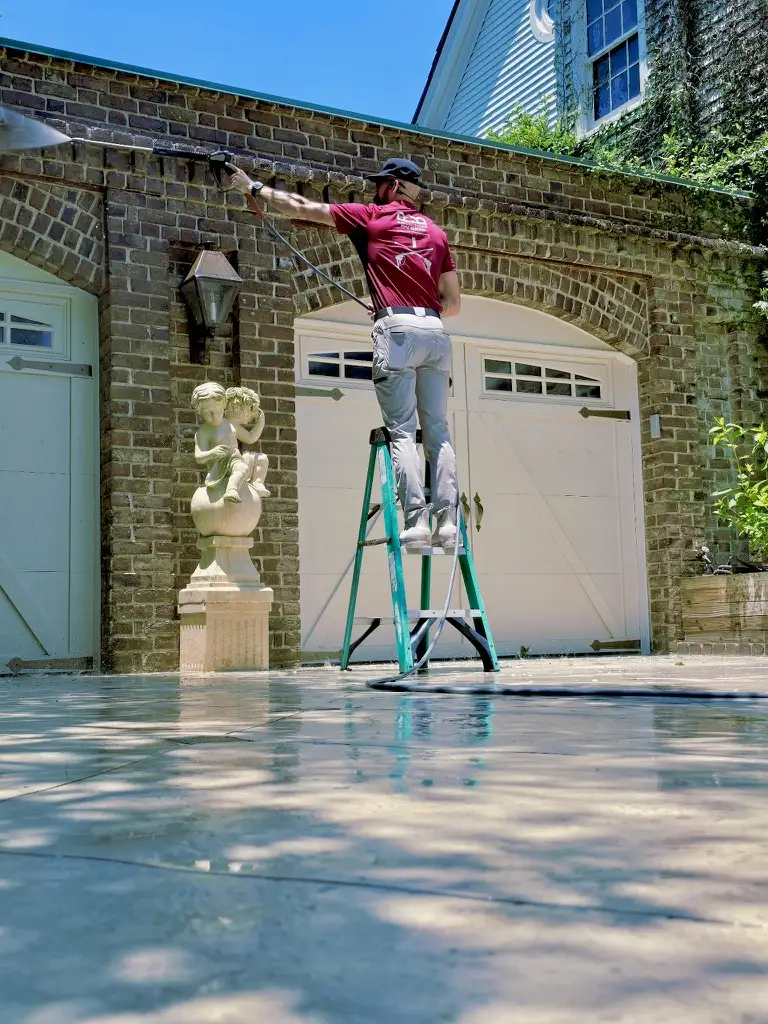
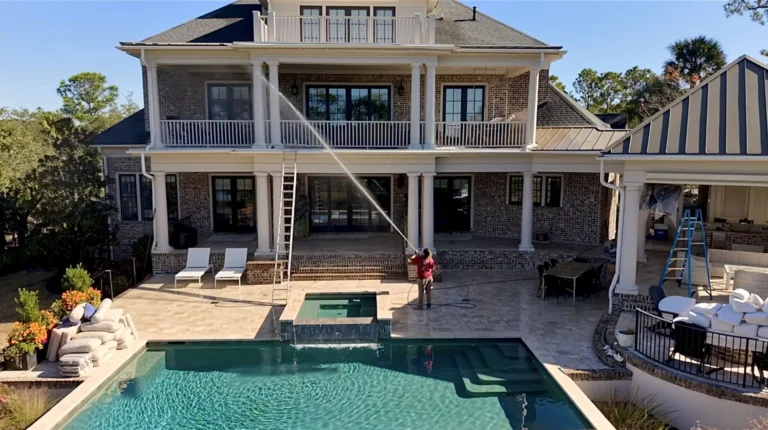
- Wash first. Salt, mildew and chalk prevent adhesion. Use low pressure and the right solution rather than a pressure wand, as we explain in soft washing versus pressure washing.
- Scrape and sand to a sound edge. Remove everything that is loose until the remaining paint is firmly bonded, then feather the edges so they do not telegraph through the new coat.
- Repair or replace soft wood. Press a screwdriver into sills and the bottoms of boards. Anything that gives needs repair before paint, not after.
- Spot-prime bare material. Bare wood and exposed patches need a quality exterior primer so the topcoat cures evenly.
- Caulk the joints that should be sealed. Use a paintable exterior-grade sealant at trim joints, and leave the bottom edges of lap siding open so moisture can escape.
- Apply two finish coats. Two coats of 100% acrylic exterior paint give the film thickness that salt air demands.
If your home was built before 1978, the paint may contain lead. Contractors who disturb it are required to follow the EPA’s Renovation, Repair and Painting rule, and you should ask any painter how they handle it.
Choosing a Finish That Holds Up on the Coast
For trim, a satin or semi-gloss finish is the usual choice. Higher sheens shed water and resist mildew better and wipe clean, which matters on surfaces that stay damp. Deep, saturated colors look striking but absorb more heat and show UV fade sooner, so on south and west elevations it is worth choosing a color with some depth rather than the darkest option on the fan deck. Whatever you pick, confirm any historic district or HOA color rules before the paint is ordered.
Doors and Shutters
Doors and shutters take more abuse than the rest of the trim and are worth treating as their own job. Removing hardware, painting all edges, and giving the door time to cure before it is closed makes a visible difference. We walk through the process in how to paint a front door.
When to Repair Instead of Paint
Paint is a coating, not a repair. If trim has rot, open joints or widespread peeling to bare substrate, the right first step is carpentry, followed by prep and prime. It is also worth setting trim work against the bigger picture, because a full repaint is a larger decision. Our guide to exterior house painting costs in Charleston sets out what drives the price, and our guide to paint and prep for the coastal climate explains what makes a coastal paint job last.
Frequently Asked Questions
Should exterior trim be a different color than the siding?
Usually, yes. Contrast defines the architecture, and a lighter or darker trim than the siding frames windows and doors. The right contrast depends on the house style and any historic district or HOA rules.
What sheen is best for exterior trim?
Satin or semi-gloss. Higher sheens shed water and resist mildew better than flat finishes, and they clean more easily in a humid climate.
How long does painted exterior trim last in Charleston?
Wood trim near the water often needs attention every three to five years, and trim generally needs paint sooner than siding. Good prep and a regular low-pressure wash extend that.
Can I paint over peeling trim?
Not without removing the loose paint first. Scrape and sand to a sound edge, spot-prime bare areas, and repair any soft wood. Painting over peeling paint means the new coat fails with the old one.
Do I need to prime exterior trim before painting?
Bare wood and patched areas need primer. Trim with sound, well-bonded paint can often be scuffed, cleaned and painted without a full prime coat.
Can trim be painted in cold weather?
Within limits. Every product lists a minimum application temperature, and our guide to exterior painting in winter explains how to work within them.
Want Your Trim Looked At Honestly?
We will walk the perimeter, check the sills and joints where problems start, and tell you plainly whether your trim needs paint, repair, or just a wash. Request a free estimate, or read more about our interior and exterior painting services.
We serve Charleston, Mount Pleasant, Daniel Island, Isle of Palms, Sullivan’s Island, West Ashley, James Island, and Johns Island.