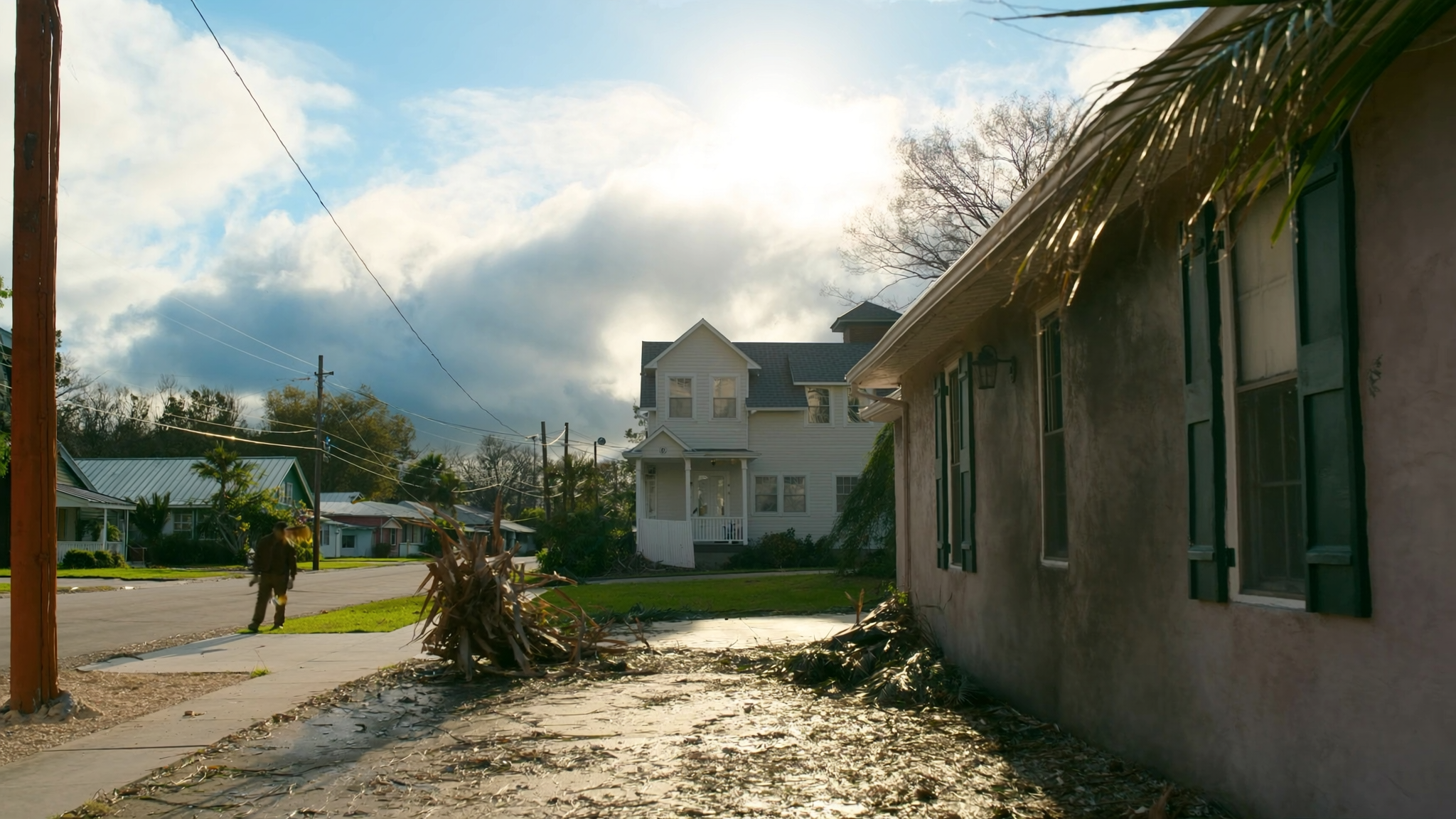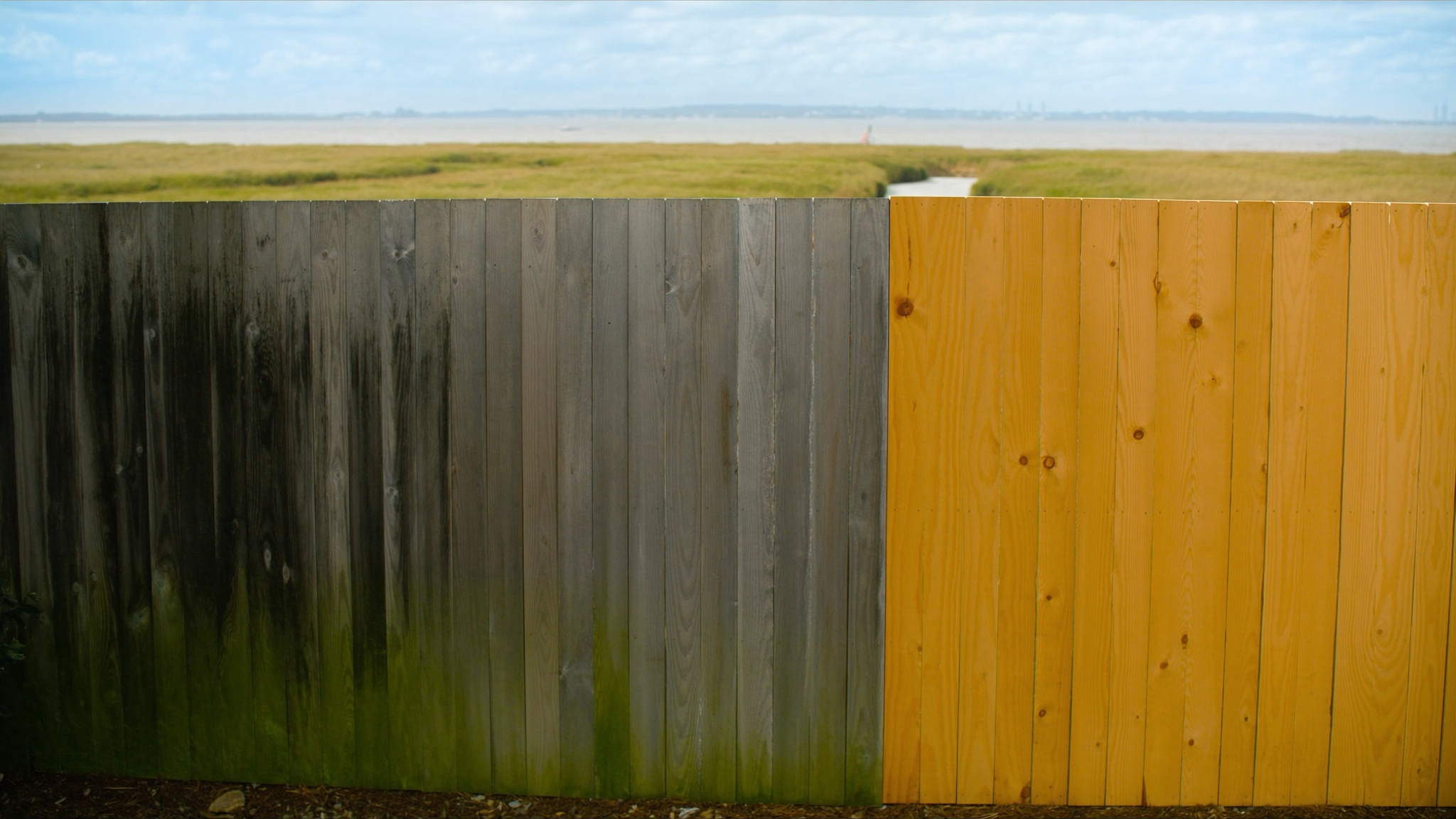

September is the statistical peak of hurricane season in the Lowcountry, and even a storm that stays offshore leaves a mark on Charleston homes. Most homeowners know what to do about a downed limb or a missing shingle. Far fewer know that the film left behind on siding, glass, and hardscape after a tropical system is not ordinary dirt, and that leaving it there for a few weeks causes damage of its own.
This guide covers what a storm actually deposits on your property, what to handle first, what genuinely needs a professional, and why the cleanup window is shorter than it appears.
Safety Comes Before Any Cleaning
Nothing in this article is worth an injury. Before anyone walks the property, confirm there are no downed power lines and no limbs resting on service drops, and treat any standing water as electrically live until you know otherwise. Stay off the roof entirely. Wet shingles after a storm are extremely slick, and storm damage is not always visible from above.
Document everything with photographs before you move or clean anything. Insurance adjusters need to see the condition as it was, and a cleaned surface is a lost claim detail.
What a Tropical System Actually Leaves Behind
Beyond the obvious debris, four things arrive with a coastal storm and all four are corrosive or biologically active.
Salt. Storm winds carry marine aerosol far inland, well past the barrier islands and across the peninsula. It settles as a fine film on siding, windows, metal fixtures, and painted trim. Salt is hygroscopic, meaning it pulls moisture out of the air and holds it against whatever it is sitting on. On glass it begins etching. On metal it accelerates corrosion. On paint it works into any hairline failure in the film.
Organic slurry. Shredded leaves, pine needles, moss, and bark get driven against walls, into corners, behind shutters, and onto porch ceilings. As it decomposes it stains and it seeds mildew colonies in places that were previously clean.
Floodwater residue. Where tidal or stormwater flooding reached, whatever it carried is now on your driveway, walkways, and lower siding. In Charleston that can include marsh sediment, road runoff, and material from the storm drain system. It is not something to leave on a surface children and pets use.
Trapped moisture. Debris packed against a wall or piled in a gutter holds water against the structure for weeks in a climate that never dries it out.
The First Seventy-Two Hours
Once the property is confirmed safe, a few things are worth doing quickly.
- Clear debris away from the foundation and walls. Anything piled against the house is holding moisture where you least want it.
- Check and clear gutters and downspouts. Storms fill them completely, and the rain that follows a tropical system has nowhere to go. Our guide to gutter cleaning and brightening in Charleston covers what a full clearing involves.
- Rinse salt off glass and metal. A plain fresh-water rinse within a few days does more good than anything else on this list. It will not remove everything, but it stops the worst of the etching.
- Open up airflow. Clear debris off porches, piazzas, and screened areas so they can dry.
- Photograph and report. Anything that looks like structural damage goes to your insurer and a licensed contractor, not to a cleaning crew.
Why Waiting Costs You
The instinct after a storm is to deal with the visible damage and get to the cleaning eventually. In Charleston’s post-storm conditions, eventually is usually too late.
The weather that follows a tropical system is typically warm, humid, and still. That is the ideal environment for mildew, and every surface on your property has just been seeded with organic material and kept damp. Growth that would normally take a season to become visible can establish in two or three weeks. The same organisms we describe in our guide to removing mold and mildew from a Charleston exterior get a substantial head start after a storm.
Salt behaves the same way. A rinse within days is straightforward. Salt left to sit for a month on glass produces spotting that requires a restoration treatment rather than a normal clean, which we explain in our guide to hard water spots and salt film on Charleston windows.
What a Professional Post-Storm Wash Covers
A post-storm service is not the same as a routine wash, because the contamination is different.
- Full soft wash of siding, trim, soffits, and porch ceilings to remove salt film and organic residue and to treat newly seeded growth
- Detailed attention to corners, shutter backs, and window surrounds where wind-driven material collects
- Surface cleaning of driveways, walkways, and patios where floodwater or heavy runoff reached
- Window cleaning with an assessment of whether salt etching needs restoration
- Gutter clearing and a flow test
- An honest report of anything we find that needs a roofer, carpenter, or electrician rather than us
That last point matters. A crew that is on every surface of your house is well placed to notice a lifted shingle, a separated seam, or a soft fascia board, and you should expect to be told about it.
Prepare Before, Recover After
Post-storm cleanup is the second half of a pair. The first half is what you do before the season, and a property that went into September with clear gutters, trimmed limbs, and secured furniture recovers far faster. Our hurricane season exterior prep checklist covers that side of it.
Both halves come down to the same idea. Protecting a Charleston home is not about reacting to damage. It is about not letting ordinary conditions turn into damage in the first place.
If a storm has come through and you want the property properly cleaned down before the growth takes hold, request a free estimate. We serve Charleston, Mount Pleasant, Daniel Island, Isle of Palms, Sullivan’s Island, West Ashley, James Island, and Johns Island.